Khamin writes about the alarming increase in incidents of mugging all over Dhaka during ramadan
Rehana Parvin, a housewife and resident of Gulshan, returned home shocked and traumatised on the afternoon of August 18.
Three muggers on a motorbike, who blocked her rickshaw on her way home from shopping near Nodda bazaar, fled the scene after snatching her ornaments and cellphone. However, she was in for a surprise when a policeman called her home to inform her that she can pick up her belongings from the Gulshan police station.
At the station, she learnt that following her mugging incident, Awami League MP Abdur Razzaque’s jeep carrying only Mohammad Hemayetuddin, his personal bodyguard, and the jeep’s driver, chased the muggers. When the jeep blocked the motorcycle’s path, one of the muggers, named Badal, shot at the jeep. Hemayet returned fire striking Badal in the neck.
Badal died on spot while his companion, Sultan, was apprehended by the public, roughed up and then handed over to the police. The third criminal managed to get away.
Although Parvin happily filed the case and returned home with her belongings, most residents of Dhaka and the other cities of Bangladesh are not as fortunate as her, as incidents of mugging are alarmingly on the rise in these cities especially during the month of ramadan when almost everyone is busy shopping for clothing items, household items and even groceries.
Sunday, 29 August 2010


Wednesday, 4 August 2010
The three-wheeler misfortunes
Khamin reveals the trend of CNG auto-rickshaw robberies that has increased in and outside Dhaka city over the last four years
Like any other morning, CNG auto-rickshaw driver Zainal Mia was out on the street with his CNG auto-rickshaw (Sylhet Tha 11-2070) looking for passengers in Sylhet city.
After managing four to five trips, Zainal parked his vehicle beside a tea stall and went to have some food. After the meal, a passenger asked Zainal whether he will take him to the Sadar hospital. Once at the destination, the passenger asked Zainal to accompany him into the hospital as he did not have any fare on himself.
‘Seeing the man in a devastated state, I did as he requested,’ says Zainal to Xtra later. ‘The man rushed into the emergency division while I waited outside,’ he adds.
When the passenger did not return after ten to fifteen minutes, Zainal came out of the hospital. To his dismay, he could not find his CNG where he had left it. ‘I immediately notified the concerned police station that my CNG had been stolen,’ he says.
Like any other morning, CNG auto-rickshaw driver Zainal Mia was out on the street with his CNG auto-rickshaw (Sylhet Tha 11-2070) looking for passengers in Sylhet city.
After managing four to five trips, Zainal parked his vehicle beside a tea stall and went to have some food. After the meal, a passenger asked Zainal whether he will take him to the Sadar hospital. Once at the destination, the passenger asked Zainal to accompany him into the hospital as he did not have any fare on himself.
‘Seeing the man in a devastated state, I did as he requested,’ says Zainal to Xtra later. ‘The man rushed into the emergency division while I waited outside,’ he adds.
When the passenger did not return after ten to fifteen minutes, Zainal came out of the hospital. To his dismay, he could not find his CNG where he had left it. ‘I immediately notified the concerned police station that my CNG had been stolen,’ he says.
Sunday, 4 July 2010
Armed & dangerous
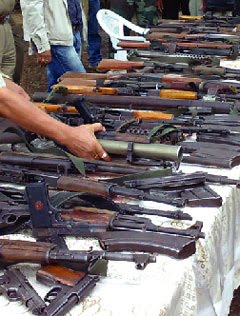
Khamin reveals the illegal arms trafficking and trade that is going on within the country unabatedly
Around sunset on March 20, the company commander Major MM Shafiqur Rahman rushes out of the Tikatuli office of the Rapid Action Battalion 3 (RAB 3) with his team, in civil clothes. Their excitement was propagated by the fact that the illegal arms trading group, whose activities they have been investigating for over a month and were trying to contact to buy fire arms while posing as a group of professional killers themselves, had finally decided to sell weapons to them.
�It was quite tedious as the traders were rapidly changing locations and giving us new ones from a number of different mobiles,� says Shafiqur to Xtra later. �Still we did not give up and held onto every possible lead,� he adds.
After half an hour on that day, Shafiqur receives a call on his phone that asks him to reach a particular Char from the Mawa ferry station by boat. �But upon reaching the Char, we were asked to go to another Char that was a few miles away from there,� he says.
After jumping three Chars in such a manner, the traders finally decide to trade on the fourth Char. �I asked my men to spread out discreetly on the Char while two members of the team accompanied me to the rendezvous point,� remembers Shafiqur.
Gone in 60 seconds
Khamin looks at the ongoing trend of car thefts and carjacking in the city revealing how the gangs prey on private car owners and drivers
It is 12:00am at night on April 7. After the day's work, Sarker Maswood Hasan, chief executive of a public relations firm Concito PR was driving home in his silver Allion car. As he approached the HSBC bank on Dhanmondi 27, one of the tyres burst out. The time was not favourable to find help on the street. It was almost barren and the few cars that moved, sped away.
Maswood got out of his car to fix the tyre himself. He did so only to realise the whole tyre leak was a trap laid out. Five men appeared out of the dark and surrounded Maswood as soon as he fixed his tyre. They threatened him with explosives. On a barren street, Maswood could do very little to protect himself against five muggers.
It is 12:00am at night on April 7. After the day's work, Sarker Maswood Hasan, chief executive of a public relations firm Concito PR was driving home in his silver Allion car. As he approached the HSBC bank on Dhanmondi 27, one of the tyres burst out. The time was not favourable to find help on the street. It was almost barren and the few cars that moved, sped away.
Maswood got out of his car to fix the tyre himself. He did so only to realise the whole tyre leak was a trap laid out. Five men appeared out of the dark and surrounded Maswood as soon as he fixed his tyre. They threatened him with explosives. On a barren street, Maswood could do very little to protect himself against five muggers.
Saturday, 29 May 2010
Amin Bazar: the crime haven of Dhaka
Khamin spends a night at the Amin Bazar area, one of the largest hubs of criminal activity in the country
After waiting with Abul (not his real name) for around half an hour at the street-side tea stall near the lake, at Amin Bazar on the night of April 13, a Bedford truck loaded with green coconuts stopped beside the lake a few yards away from us around 10:30pm.
Abul whispers to me that the truck has arrived from Jessore with the coconuts and then points toward the way the truck communicates by switching its headlights on and off twice - that its ‘goods’ are ready to be unloaded.
Three men walk toward the truck from another stall while two on rickshaw vans gradually make their way toward the truck also from another direction. ‘Just observe the situation and act like a pedestrian having tea at this stall,’ advises Abul, who is also a part of this Chalan and currently works for the Gangchil Bahini unwillingly.
Within 10 to 15 minutes, the two vans are loaded with the green coconuts and moves away from the truck which reinitiates its journey toward Karwan Bazar with the remaining coconuts. ‘The coconuts on the two vans are actually carrying heroin, worth at least 50 lakh takas smuggled in through the Indian border,’ says my companion.
After waiting with Abul (not his real name) for around half an hour at the street-side tea stall near the lake, at Amin Bazar on the night of April 13, a Bedford truck loaded with green coconuts stopped beside the lake a few yards away from us around 10:30pm.
Abul whispers to me that the truck has arrived from Jessore with the coconuts and then points toward the way the truck communicates by switching its headlights on and off twice - that its ‘goods’ are ready to be unloaded.
Three men walk toward the truck from another stall while two on rickshaw vans gradually make their way toward the truck also from another direction. ‘Just observe the situation and act like a pedestrian having tea at this stall,’ advises Abul, who is also a part of this Chalan and currently works for the Gangchil Bahini unwillingly.
Within 10 to 15 minutes, the two vans are loaded with the green coconuts and moves away from the truck which reinitiates its journey toward Karwan Bazar with the remaining coconuts. ‘The coconuts on the two vans are actually carrying heroin, worth at least 50 lakh takas smuggled in through the Indian border,’ says my companion.
Saturday, 15 May 2010
Land of poppies
Opium poppy is being cultivated along the borders in Lalmonirhat, Kurigram and Bandarban in the name of soyabean plants. Khamin investigates
It was by a sheer stroke of luck that I came across information of opium poppy cultivation in the Lalmonirhat and Bandarban area while on another assignment. After being assigned with this story, I reached the Kurigram-Lalmonirhat area, close to the Bangladesh border with India, on the night of February 14. 
photo by Khamin
I began asking the locals about such plantations early next morning. Some suggested I search the Jessore region along the border while others speculated that such plantations are probably at the Dahagram enclave beside India.
After reaching the Dahagram enclave of Lalmonirhat that afternoon, I found only marijuana fields there. The day was basically fruitless as locals in the area could not provide any information about the location of poppy fields.
Thursday, 6 May 2010
Rohingya tersingkir hingga kamp pengungsi
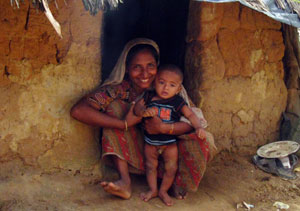
Bangladesh - Bagaimana kondisi kamp pengungsi etnis Rohingya yang melarikan diri akibat politik minoritas di Myanmar?
Sebanyak kira-kira 30.000 pengungsi etnis Rohingya menempati kamp–kamp pengungsi di wilayah Kutupalang, tanpa memiliki dokumen resmi sebagai pengungsi. Enam kamp pengungsi berada di Teknaf, Banglasdesh. Dua diantarnya di Ukhia dan Nayapara merupakan kamp resmi di bawah pengawasan Badan PBB UNHCR.
Menurut data yang dimiliki pemerintah Bangladesh terdapat 23.857 pengungsi etnis Rohingya, 9.857 orang di Nayapara dan 14.000 orang di Kutupalang. Namun berdasarkan data UNHCR ada sekitar 28.389 pengungsi yang terdaftar.
Tuesday, 27 April 2010
Pengungsi Etnis Rohingya Myanmar
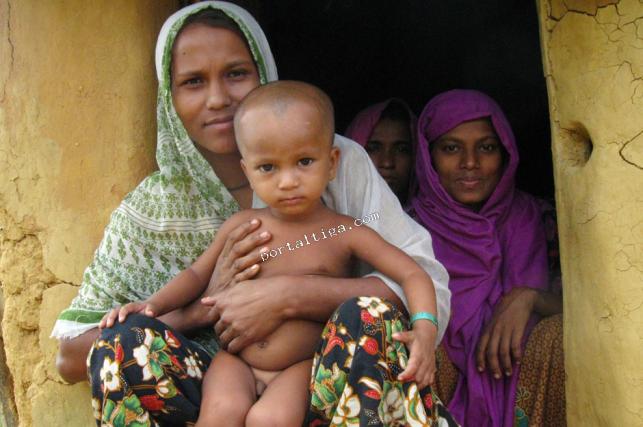
BANGLADESH - Sejumlah pengungsi etnis Rohingya asal Myanmar, bersama anaknya di Kamp Pengungsi Kutupalang, Perbatasan Myanmar - Bangladesh, Minggu (4/4). Sekitar 30.000 pengungsi etnis Rohingya menempati kamp - kamp pengungsi di wilayah Bangladesh, mereka merupakan korban konflik politik kaum minoritas oleh pemerintah Myanmar. Le portig / Khamin
Myanmar : Etnis Rohingya Minoritas Yang Tercabik
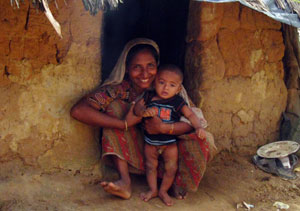
KHAMIN – Koresponden Le portig di Bangladesh , melakukan peliputan Kamp pengungsi etnis Rohingya, yang melarikan diri akibat pertikaian politik minoritas di Myanmar. Khamin mengunjungi sejumlah kamp pengungsi diantaranya di Kutupalang dan Teklang, perbatasan Myanmar – Bangladesh.
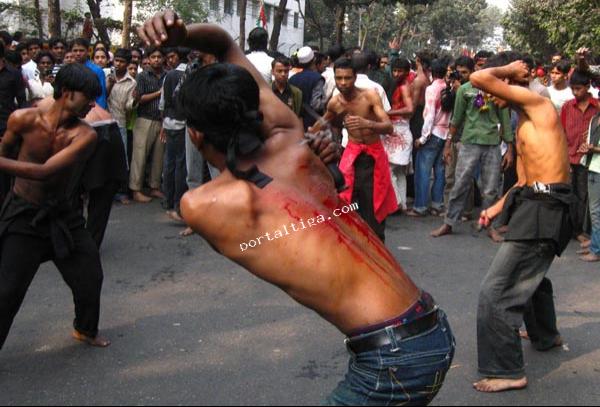
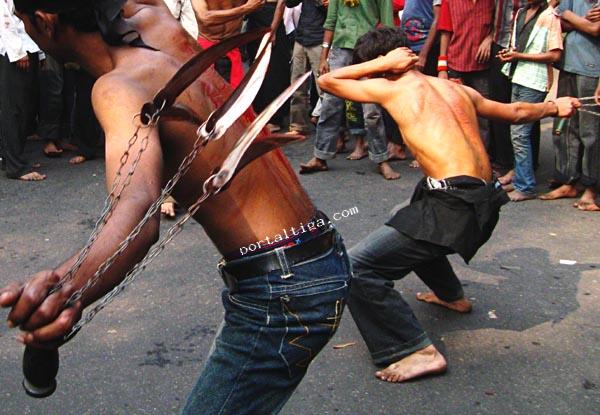
Khamin - Bangladesh: The Ashura Day
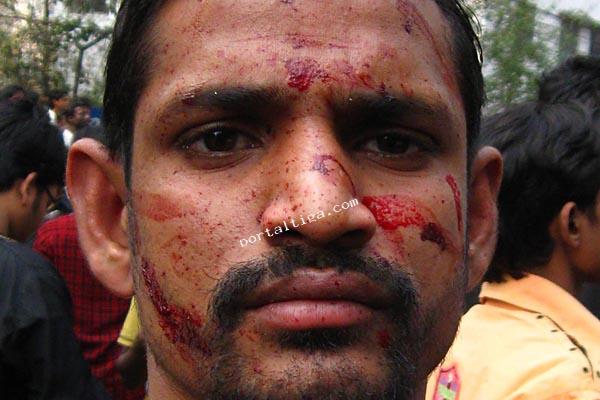
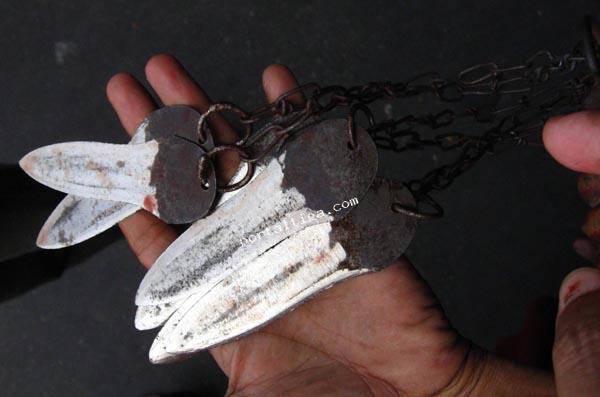
Dhaka, Bangladesh - The Ashura on Thursday commemorating the Karbalas tragic incidents that took place on Oct. 10 in 680 A.D. The Shias are playing knives as symbol of Karbalas tragedy. A good number of young and middle age Shias played by knives on their back as showing samphaty to the missing prophets, as a symbol of their solidarity with fighters of Islam, traditionally lash shackles on their bodies to shed blood for the martyrs of Islam.�Khamin untuk portaltiga.com
Saturday, 24 April 2010
Target practice
Khamin investigates the alarming trend of Bangladeshi nationals being killed by BSF members at the border areas
Several ministerial-level meetings between Dhaka and Delhi, three Directorate General level talks between Bangladesh Rifles (BDR) and Border Security Force (BSF) and over five ADG level meetings could not bring about a sustainable solution to the wanton killing of Bangladeshi nationals at the border regions by the Indian border security forces, the BSF. 
photo by Prito Reza
Saturday, 17 April 2010
Disaffection
Allegations of large scale corruption, neglect, job insecurity, and poor play plague the Ansars-VDP in the country. Khamin investigates the reasons behind the grievances of regular Ansars
On February 16, Ansar Battalion member Azim Uddin of the Khilgaon Ansar headquarters was remanded for two days on charges of threatening to stage a mutiny. He had sent an SMS to the Director General of Bangladesh Ansar and Village Defence Party stating that if the demands of Ansar members are not met, than a rebellion, similar to the BDR rebellion, would be carried out on February 28, during the national parade day at the Shafipur Ansar Academy in Gazipur. 
photo by Prito Reza
The tobacco limbo
Khamin finds out the reasons behind the increasing level of tobacco production in the country
About 60,000 acres of land have been brought under tobacco cultivation throughout the country under the direct supervision of Bangladesh Agriculture Extension Department (BAED), during the current season, according to a report titled ‘Bangladesh Agriculture in the 21st Century’. A total of 27,000 metric tonnes of tobacco is expected to be produced in the country during the current season whereas last year’s production was around 24,000 MT of tobacco from 55,000 acres. 
photo by Al-Emrun Garjon
Between comfort and commitment
Khamin reveals the miserable state of health service at the upazila health complexes in absence of adequate doctors and finds out how poor infrastructure, frequent transfer and poor pay keep the government doctors away from rendering their service
Tuesday, 17 November 2009
On the verge of ruins
Khamin reveals the condition of our heritage buildings and sites currently being destroyed and damaged by locals
Our 400-year-old city has numerous buildings architecturally valued due to their age and designs. 
photo by Al-Emrun Garjon
However, most of these buildings are currently under threat due to the lifestyle of locals, especially in the old town area where most of these are located.
According to architects and conservationists, newly constructed buildings are not following the rules and regulations laid out by Section 61 of the Building Construction Act of 2008, regarding buildings – some of which have been declared heritages. Experts fear that the persistent destruction and irregularities caused may lead to the overall disappearance of all Moghul structures in the area, taking advantage of Rajuk’s indifference toward the activities.

Burden from across the border
Khamin takes an in-depth look at the state of Rohingya refugees, whose influx into Bangladesh over the last 30 years, from neighbouring Myanmar, is severely stretching the country’s resources
Mohammad Haseem is a Rohingya, living with his wife and his six-year-old daughter at the Kutupalang refugee camp in Ukhia, Cox’s Bazaar. 
On September 2, he arrives at the office of AFM Fazle Rabbi, a designated magistrate who is in charge of the camp, to reissue his ID card.
The luggage businessmen
Khamin sheds light into the phenomenon of travellers bringing restricted and untaxed items from foreign countries through their personal luggage, into the country and its markets, and how this affects the entire system
Around seven months ago, Masud Habib went to the IDB bhaban, at Agargaon, to buy a rechargeable battery for his digital camera. 
photo by Prito Reza
After browsing a number of shops, Masud was overcome by confusion and dilemma. While one store asked for Tk 500 for a pair of the battery he was looking for, another shop asked for Tk 700 per pair. ‘I was confused about the real brand and the actual price,’ he tells to Xtra, later.
Slum of terror
Khamin exposes the infamous BNP slum in Agargaon, Dhaka, where drug-peddling, arms dealing, and a wealth of terrorist activities keep the city's inhabitants in fear and keeps afloat the illegal slum-lords and politically active players, in this dangerous network
On April 18 this year, a clash between drug- peddlers and police took place at the BNP slum when law enforcers were jumped on by drug-peddlers. 
photo by Al-Emrun Garjon
Both the peddlers and police chased each other while the peddlers pelted brickbats on the lawmen.
The right to religion
Khamin writes about the dwindling rights and freedoms of the minority Hindu population of the country, from the failure of secularism to prevail in its true essence
Like any other day, Rikta Devi arrives at the Dhakeshwary Mandir – perceived as the most symbolic and significant Hindu temples in the country – with her two young daughters. 
However, the zest and enthusiasm with which she usually approaches her religious rituals seem to have waned considerably in recent times, especially when she recalls the vile sexual harassment her daughters are routinely subjected by loafers, en route to the temple.
Army pullout in CHT, A future of hope and apprehension
Khamin looks at the state of affairs in the Chittagong Hill Tracts following the government’s decision to gradually withdraw the military forces based in the area
In 1982, Komol Bikash Chakma migrated to India with his entire family, 
leaving behind all his property including his home and 40 acres of cultivatable land, in Dhiginala, Khagrachhari.
Almost inevitably, his land had been occupied by Bengali settlers with the alleged aid of the military personnel based in the area. Upon his repatriation in around 1999, Komol was embroiled in a legal battle to reclaim his land – parts of which he had reacquired, including his home, with the help of relevant authorities. However, during the tenure of the previous caretaker government, Komol was forcibly evicted from his home and had been homeless for quite a while.
Sunday, 27 September 2009
Drik: At the heart of photography for 20 years
by Khamin
 |
Established on September 4, 1989, Drik has emerged as the country’s leading photography agency built around the concept of social justice and has been playing potentially significant roles in human rights movements both at home and abroad.
Re-conquering footpaths
Khamin writes about the unrelenting illegal hawker problem of Dhaka city and weighs out the possible solutions to it as provided by experts and studies
 |
Lack of proper public transport and private vehicles did not bother the average pedestrian, back then. A brisk walk from Kakrail to Baily Road or from Green Road to Dhanmondi was a refreshing change for the Dhakaites, then.
Thursday, 16 July 2009
When the protectors are killers
Khamin reveals the facts, behind the fiction, that the law enforcement agencies have provided about the latest extra judicial killing of Mohsin and Jinnah
On the morning of May 29, citizens were astounded to read about the deaths of 23-year-old Mohsin Sheikh and Mohammad Ali Jinnah, 22, both students of the Dhaka Polytechnic Institute, on the daily newspapers. 
photo by Sanaul Haque
Mohsin, a fourth-year student of electrical engineering department and Jinnah, a third-year student of mechanical engineering department, of the institute, died in an alleged shootout with the Rapid Action Battalion (RAB) 2, sometime between 10pm and 5am during the dates of May 27 and 28. Mohsin and Jinnah were actually from Alfadanga upazila, Faridpur and Tazumuddin upazila, Bhola respectively and lived in the Farmgate area by themselves.
Friday, 19 June 2009
Untraceable and untouchable: the Jubak story
Khamin reveals the sufferings of depositors who had invested in different schemes of Jubak and is yet to get their money back
Two fifty depositors, who had invested their life’s savings at Jubak’s Shutrapur Branch of Old Dhaka, tried to claim their money back after the year-long debit note and real estate project plan had matured in December 2008. 
Depositors try to attack Jubak
director Rashedul Huda
at the court premises
These depositors were desperate to regain their money and not even the interest, after maturity, that Jubak had committed prior to the investment. To their dismay, they were threatened by Jubak authorities for even claiming their own money!
Eat your heart out for taka 10 at Hotel Salaida
text and photo by Khamin
In the heart of Karwan Bazaar - an area renowned for its bustling marketplace with the towering corporate offices at the periphery - lays a particular enterprise which tends to go largely unnoticed on many accounts. 
In such a lucrative location, the owners of this venture do not even have to worry about land rents making it profitable and to an extent, reasonable for its customers. Built primarily on the foundation of good will, Hotel Saladia as it is known for its roof made from a coarse cloth material called salas, caters to the very basic, fundamental needs of people, all at the expense of less than Tk 10.
Ambition, corrupt ion and nepotism
Mushfique Wadud and Khamin reveal the gross irregularities and nepotism that revolve around the second-largest NGO in the country, Proshika and Qazi Faruque, its controversial chairman
Abul Kashem Palash, the acting director of Proshika Manobik Unnayan Kendra, was arrested by the law enforcement authorities just after the declaration of the state of emergency in the country on January 11, 2007 for being involved in anti-social activities during the pre-election violence from October to December 2006 as well as in the Awami League leader Abdul Jalil’s infamous ‘trump card’ deadline. 
photo by Prito Reza
Death over jhoot
Khamin reveals the symptoms and reasons behind alarming rise in murders, extortion and snatching of jhoot products, attached to the RMG sector
Although two decades ago the residue of the fabrics posed a burden for the ready-made garments manufacturers (RMG), the item has now become a platform for a new sector with which is attached the livelihood of thousands of retailers and wholesalers. 
photo by Prito Reza
Monday, 18 May 2009
In the name of ‘student politics
Mushfique Wadud, Khamin and Mohiuddin Alamgir list the various illegal businesses that make student politics so dear to the average student
Riaz Uddin always dreamt of making his son a doctor. So when his son, Abul Kalam Asad Rajib came tenth on the SSC examinations merit list, he considered it the first step in the fulfilment of his dream. Rajib, second of Riaz’s three sons, soon got admitted to Dhaka Medical College. Everything was going according to plan and Riaz only had to wait a few years to become ‘a doctor’s father’. 
photos by Al-Emrun Garjon
Decors of historic affiliation
Khamin finds out how terracotta has found its appeal back with the city dwellers and realises the importance of reviving the pottery industry
 |
Sunday, 10 May 2009
Castles made of sand
text and photos by Khamin
 |
 |  |  |
Death on seventy-two wheels
text and photo by Khamin
Steamer coming! Steamer coming! Quick! Take a suitable seat! Shouts a student of Chittagong University to his cousin, who is an enrollment candidate. At the same time another man, Kashem, is busy in crowd-control with his trusty bamboo stick. He is the only man on duty without a whistle. Thirty-thousand seven-hundred seventy-nine applicants face admission tests for the C unit (faculty of business administration) at Chittagong University. The date is November 20, 2008. 
Midnight at Karwan Bazaar
text and photos by Khamin
What is the first thing that comes to mind when you think of the night scenario at Karwan Bazaar? Definitely not the sound of trinkets or the whiff of freshly-baked pizzas! It's a frenzied scene as a full-pitched bazaar flows by with smiles and sighs. Despite an almost unbeatable array of fresh local produce at the supermarkets, the wet markets start to look increasingly lacklustre next to their competitors, the polished supermarket aisles stocked with enticingly packaged goods. 
Thursday, 7 May 2009
It's a curse to be born Christian in this country
Khamin investigates the suicide of Chittagong University professor Andrew Alok Dewary, and the colleagues who apparently drove him to it
I am responsible for my death. The distress and complications at my workplace are also to blame. I plead forgiveness to all. It�s a curse to be born Christian in this country. 
Help my two children Pavel and Apala in their education. To Musa Bhai of Srijani Trust, please help these two meritorious children. Shamim madam (Srijani), you are generous. Please help my children... I plead forgiveness from all.
Tricked, tortured and castaway
Musfequr Rahman, Khamin and Mushfique Wadud meet the Bangladeshi survivors of the ill-fated boat that was carried into mid-sea, set loose by the Thai authorities forcing 412 people to endure torture, hunger and imminent death
Adding injury to our salt
Musfequr Rahman and Khamin reveal the grievances of thousands of salt farmers based in Cox�s Bazaar and Maheshkhali who have fallen victim to syndicates formed by landowners, middlemen, truck-drivers, influential locals and authorities

photo by Khamin
Vermin
Khamin and Musfequr Rahman reveal the hardship and impoverished state of the inhabitants of Chitagong Hill Tracts, as they battle against poverty, joblessness, and a never-ending war with the primary source of their woes - the growing population of rodents which destroy crops, spread disease, but are yet to be taken seriously by the government

Monday, 4 May 2009
CHARMERS

Text & photos by Khamin
Khamin travels to Najirhaat, Chittagong to observe the uniquely intriguing lives of the bede tribes of the area who enchant audiences with their skills as snake charmers, while traveling to remote areas to offer their services as healers. The tribe consists of seventeen families who are intertwined not just through profession, but also in leadership. One man leads the pack in all their adventures through thick and thin, settling disputes and looking out for the young and old. The lifestyle is quite similar to the ancient aboriginal tribes that popularised the concept of a tribal chief who would decide for the masses - setting down laws, and deciding where to migrate next. The tribe consists of individuals of all ages.
 Shredded clothes, no proper form of recreation, and no education - but these kids still find it within themselves to laugh, play, and live on. Their world is simple, yet riveting. They make the most of whatever they have, which is precious little, unfortunately |
The academic lizard
Khamin meets the gui shaap, a reptile that lives on the Jahangirnagar University campus and learns of the harmonious relationship the lizards have with the staff, students and faculty that allows the campus to be home to a large population of this species

photo by Khamin
Power of the people
Power of the people
Khamin speaks to the survivors of the Barabkund slaughter in 1973 and recounts the corrupting factors that led to the first nationwide workers movement in newly independent Bangladesh
February 4 is a very important anniversary for the workers of RR Textile and RR Jute Mills, owned by the Bawani group of Pakistan before the war currently state-owned, a day when they wear a black ribbon on their chests. This day is for workers coming from outside districts, remembering the seventeen workers killed here 36 years ago. 
The RR Textile and Jute Mills workers
colony attacked on February 4, 1973
photo by Khamin
Subscribe to:
Comments (Atom)